
"The Charleston"
James P. Johnson's most famous work, especially for Mark Morris
The premiere last night was a hit! The audience clearly loved Mark Morris’s dance to James P. Johnson’s piano music. I suspect the Mark Morris Dance Group will be delighting their fans with You’ve Got To Be Modernistic for years to come.
There are five more performances this week at the Joyce including Saturday matinee.
Most of the score is straightforward, with one exception, “The Charleston.” As I explained to Marina Harss in the NYT preview, “I thought, because that piece is so famous, there was room to do something different...I gave it the avant-garde treatment.”
“The Charleston” is more familiar from movies and television than from the active jazz repertoire. The piece is an essential element to the soundtrack to Fitzgerald’s coinage “The Jazz Age,” meaning the Roaring ‘20s, flappers, speakeasies, and the iconic Charleston dance step.
Johnson himself did not record a piano solo version. There is a piano roll, part of a medley, which is stiff and probably edited,
and a 1947 band version with the legendary Sidney Bechet.
I don’t like this Bechet version much, despite the very great musicians present, Muggsy Spanier, George Brunies, Albert Nicholas, Danny Barker, Pops Foster, and Baby Dodds. This mostly black band was organized by white critic Rudi Blesh, and Blesh definitely wanted his musicians to stay in a certain lane.
Part of the genius of Louis Armstrong, Count Basie, and Duke Ellington was how they could transcend the quotidian delivery of dance music in a segregated environment where black musicians were often treated like minstrel characters. This Bechet “Charleston” is not minstrel, of course, but there is an aspect to the sound that reminds me of a New Orleans band playing for tourists on Bourbon Street. The producer says to the audience, “It’s 1947, but remember the dance parties of 1924?” while the band says to each other, “It’s a gig.”
James P. Johnson’s recorded piano solos transcend all that. Sure, you can dance to them if you want—they are even marked “Fox Trot” on the label—but they are essentially private musings from a poetic virtuoso.
In general, the solo pianists (and solo blues guitarists) have the edge in the pre-bebop discography of jazz: those singular sounds remain mysterious and timeless in a way that many full band records do not. (Again, my critique does not extend to Pops, Duke, or Basie.)
When making a score for Mark Morris, I knew I needed to include “The Charleston,” but it was the one moment where I worried about being on Bourbon Street.
The Art Ensemble of Chicago has a helpful instruction: “Ancient to the Future.”
I put the main part in 5/4, which is unexpected enough, and then the final chorus has a 5:4 polyrhythm under a 4/4 Dr. John right hand. This is also sort of a Conlon Nancarrow reference, which is suitable for James P., for both Nancarrow and Johnson worked with piano rolls.
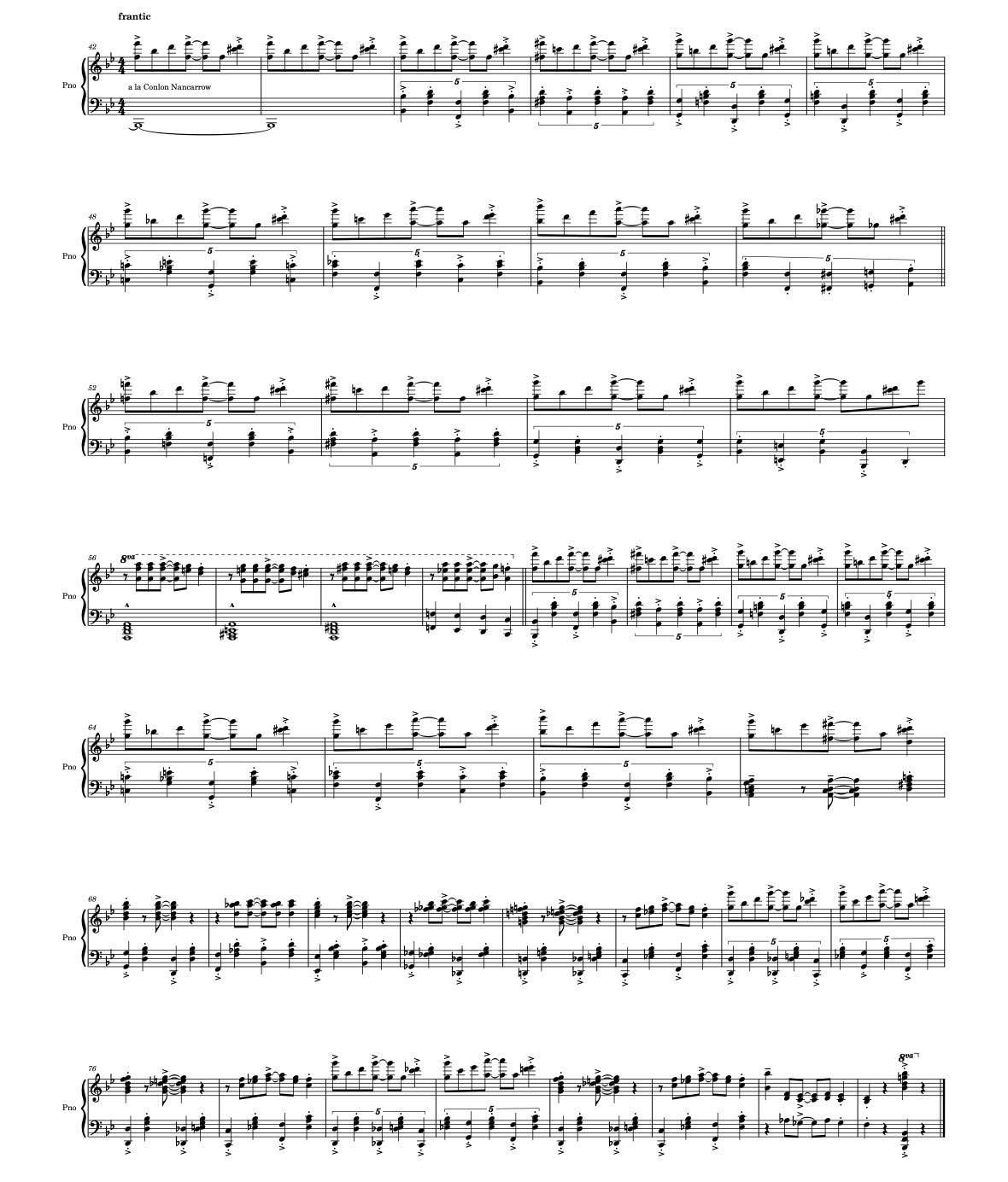
It was rather stressful playing the premiere last night. Quite a few notes, all in an exact sequence. I practiced a lot in advance, but most professionals would agree you shouldn’t practice so much the day of the performance, especially in solo repertoire. At curtain time, the music must feel fresh, not rehearsed to death.
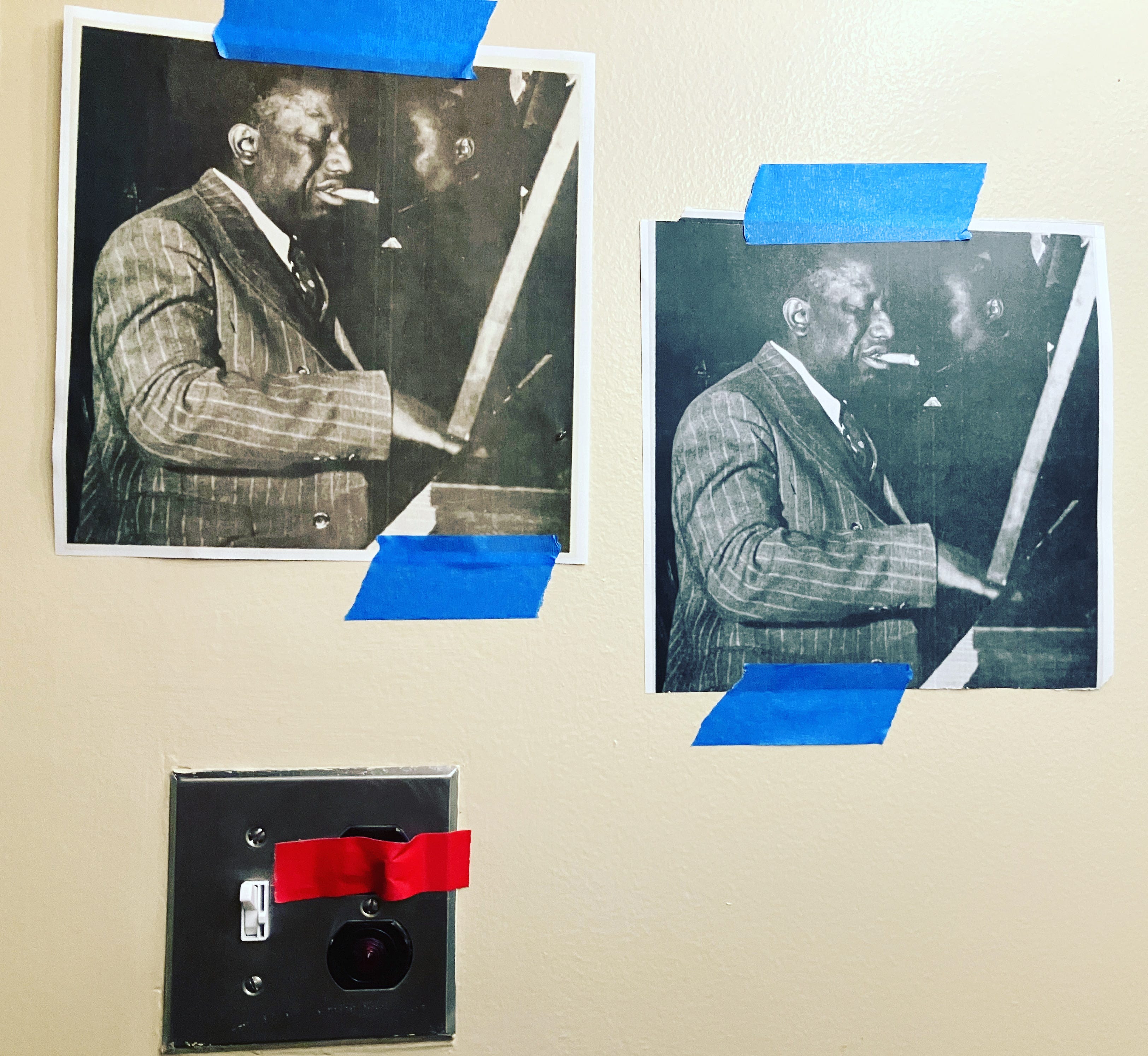
In lieu of mindless repetition, I hung a photo of James P. Johnson in my dressing room at the Joyce. It seemed to help.
Footnotes:
As far as I know there are no classic records of “The Charleston” as a jazz piano solo. A great JPJ record is of Edgar Sampson’s “If Dreams Come True”— that’s the kind of record I wish he had made of “The Charleston.” After JPJ, I wish Art Tatum had treated it as a showpiece and Earl Hines had done a wild rhapsody.
JPJ plays the not-very-well-remembered verse on these two “Charleston” YouTubes, a reminder of a different era, where presenting the sheet music seemed part of the package. Someone like Bing Crosby usually sang the lesser verses on his early 78s.
5:4 stride bass has been turning up in my commissions for a few years now, starting with “When I’m 64” for Pepperland and then “The Third Man Theme” in Simply Cinematic. How long will I have this special effect more or less to myself? Probably at least another decade? Was it a mistake to post this today?
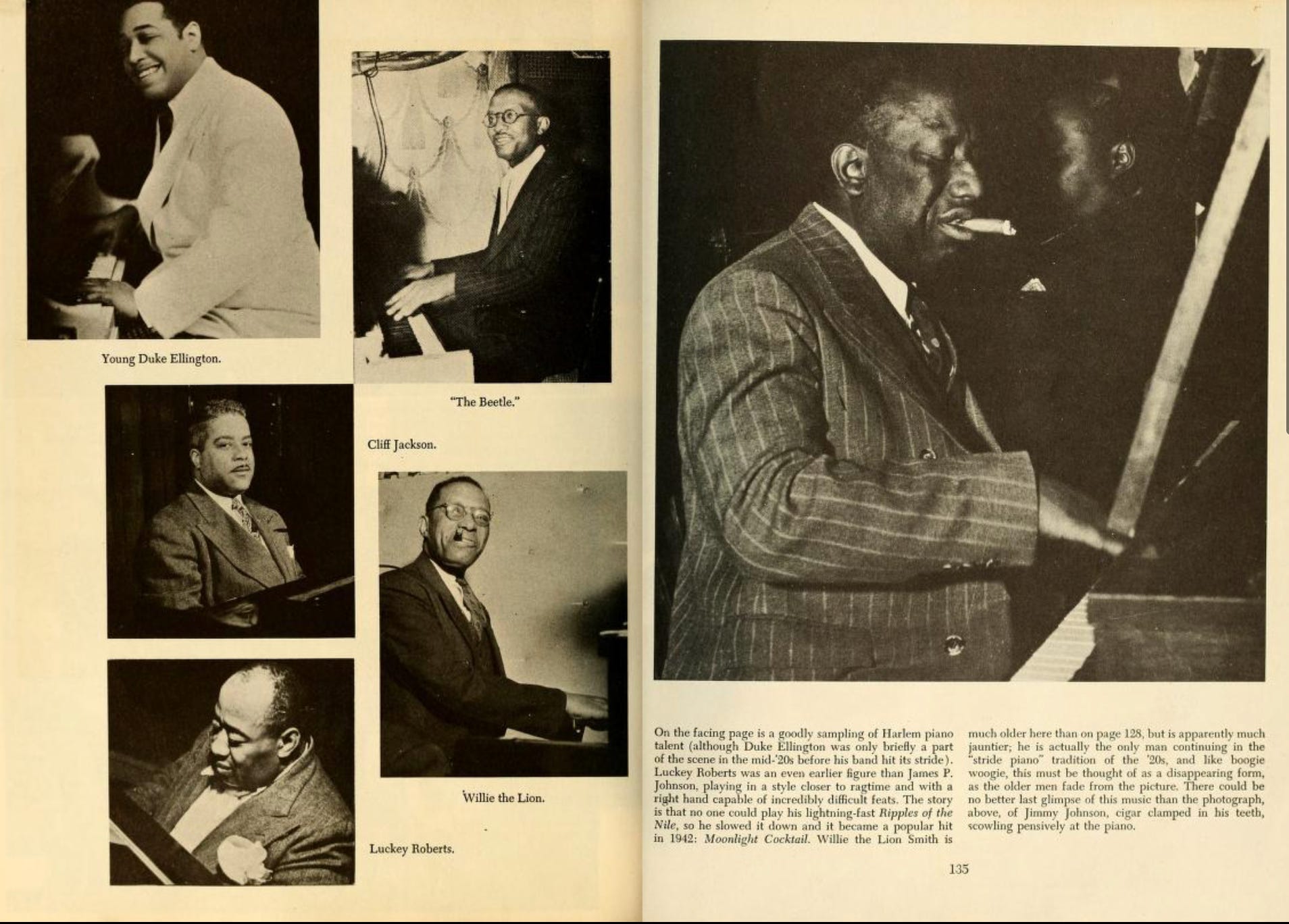
I first saw that photo of JPJ in A Pictorial History of Jazz by Orrin Keepnews and Bill Grauer. My living room (with the piano and records) in high school was decorated with pictures from that volume, including this JPJ: I had ruthlessly disemboweled the book with scissors. Later I bought another copy, of course. Great book! The relevant chapter is “Harlem Strut,” where the commentators conclude, “There could be no better last glimpse of this music than the photograph, above, of Jimmy Johnson.” The commentators were not wrong at the time…yet posterity may have the last word yet, especially with a major Mark Morris dance now on the books.
Great post - thanks for the video which is fun to hear but I bet is tricky AF to play. I enjoy all your posts but the Mark Morris ones like this are a special treat!
Dig.