
New Solo Piano Recordings
recent releases from Jason Moran, Yvonne Rogers, Marta Sanchez, Magda Mayas, Marc-André Hamelin -- plus Jonathan Paik and Brad Mehldau
A fabulous and provocative crop of new sounds! All this is on a fairly esoteric and experimental tip, with the exception of the Mehldau boogie woogie at the end.
Jason Moran plays Duke Ellington
(Bandcamp link)
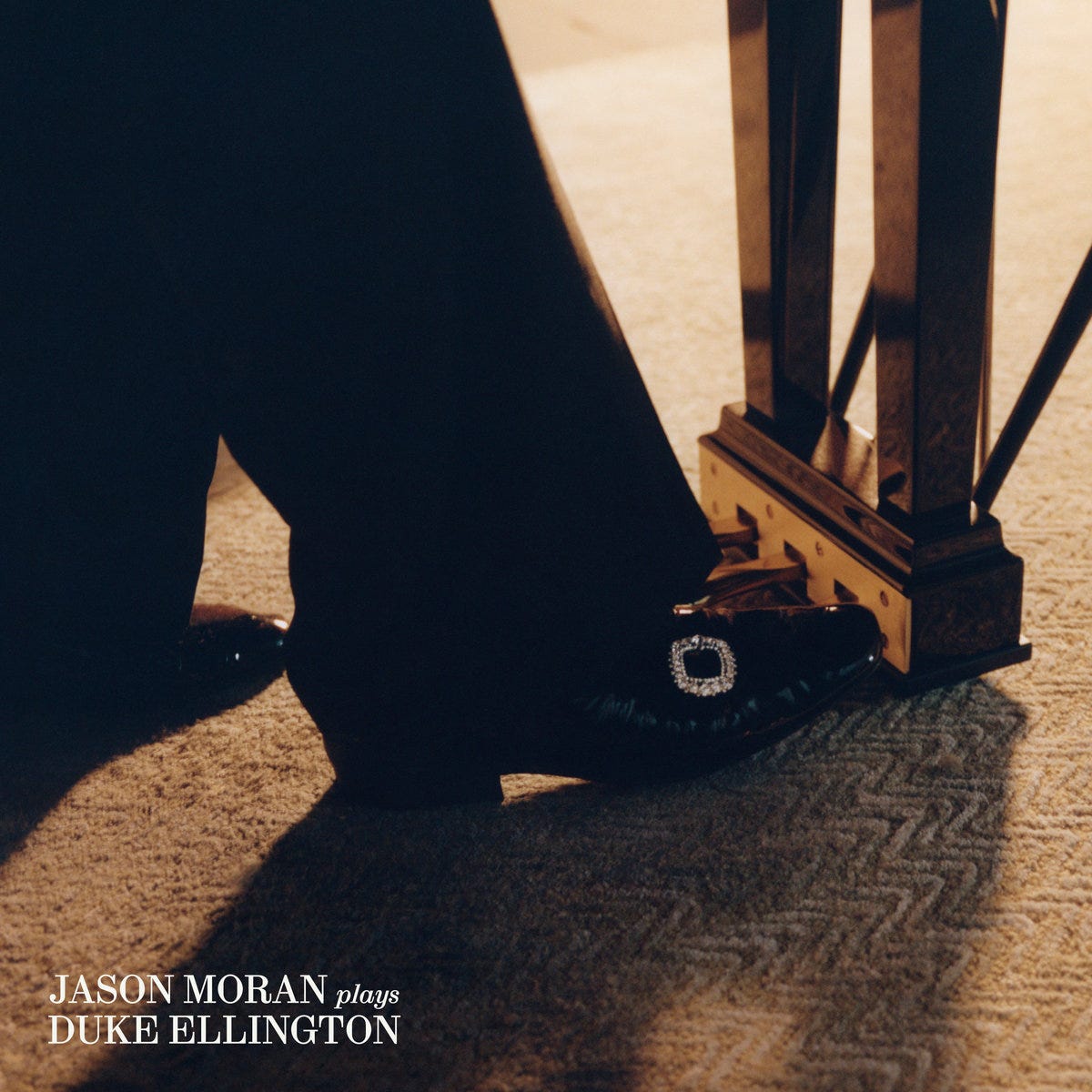
Moran has been playing his own way and like nobody else since the beginning. The first time I heard him insert a R ‘n B vamp into a standard was on “Body and Soul,” way back in 2002, on his first solo piano album Modernistic. That template continues for some of Plays Duke Ellington, as on the first two tracks, “I Got It Bad and That Ain’t Good” and “Sophisticated Lady.” (Such an approach was also heard in expanded band form on All Rise: A Joyful Elegy for Fats Waller.) Playing a beat like this aligns with the fashionable, the ever-new, the dance. It is not accidental that the cover of Plays Duke Ellington is a picture of glamorous shoes by the pedals of the piano. This is Moran. It is also Duke.
The opening “I Got It Bad and That Ain’t Good” is so smooth and groovy it might suggest Mulgrew Miller in a gospel mood — at least until Moran lets loose with some of his post-Don Pullen flourishes. “Sophisticated Lady” is mostly a vamp: The song is in A-flat, and Moran hangs out in B-flat minor, the ii chord, a favorite place for Moran to hang out — until the end, with a shift to the G major tonality of the bridge, some processed effects, and just one or two notes of the melody. Wow! What the heck did I just listen to?
The Armory Concert from 2016 was a display of virtuoso piano textures almost etude-like in nature. Some of those conceits reappear on Plays Duke Ellington, including a reprise of the heart-stopping blues flourish “South Side Digging.” Another highlight is the central section of “Black and Tan Fantasy,” a long exploration of fully resonant low register sound, a sound verging on pure noise, a sound only available from a concert grand piano.
Yvonne Rogers, The Button Jar
(Bandcamp link)
Kris Davis has stepped down from being President and Artistic Director of Pyroclastic Records; her replacement is Nate Wooley, an excellent choice. It is good that Davis saw this Yvonne Rogers solo album to term before she left, for it is a special release, charismatic and mysterious.
Rogers is part of a new breed of Brooklynites, and I don’t know some of the references, although Jason Moran is a palpable influence. Part of Rogers’s concept is definitely process music, distantly related to old-school minimalism, but now with “new and improved notes” including much dissonance. Quite a lot of the album seems fully-composed, it’s hard to know where the paper stops and the improvisation begins. “Scatter and Sort” has blowing over a swing beat, although the expanded piano texture might recall, say, a polyphonic etude of Ferruccio Busoni. A gorgeous “Cloud Chorale” has something of a Thelonious Monk sweep.
The process style is evident on a well-produced video from the session, “Mismatch.”
Marta Sanchez, For the Space You Left
(Bandcamp link)
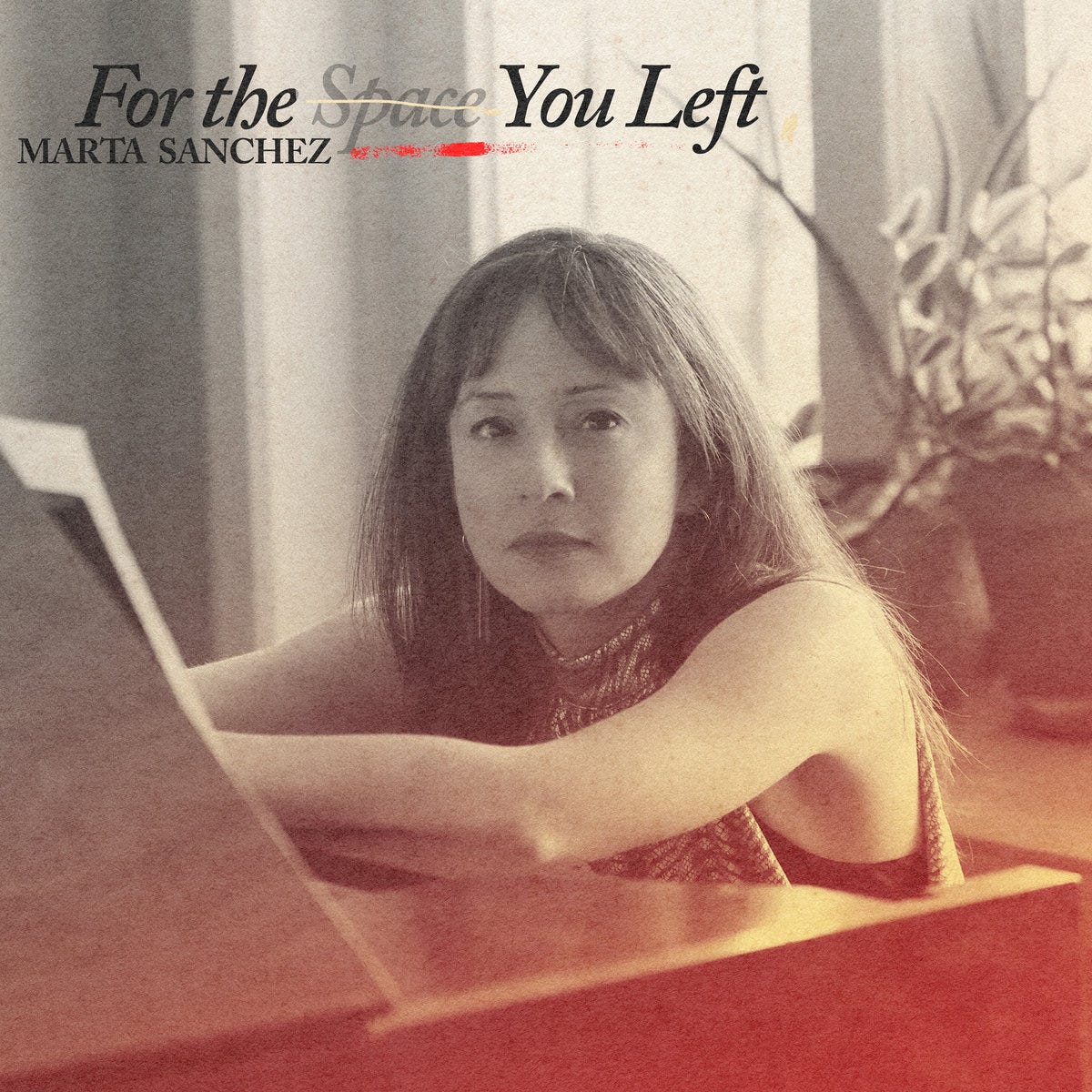
I’ve been listening to Marta Sanchez for a long time, in fact I’ve even written liner notes for some of her earlier records. Two years ago I heard the music on For the Space You Left live in concert and was immediately impressed. The gambit is preparation, where the notes are transformed in a deliberate and basic fashion. (From her notes: “All preparations use gentle, non-invasive materials such as paper, Blu-Tack, and tape.”) Sanchez has her own rhythmic feel, that was apparent from the first time I heard her, and the rather stark sounds of this altered universe bring out the groove. It’s an orchestra of drums, but the pitches are certainly discernible, and the classic Sanchez harmonic language (as heard on her quintet records) remains intact.
“Frost Bloom” leads of the album, a good choice, for the composed material is immediately charismatic. While improvising, the fast lines with a faintly ominous atmosphere (and mostly on pitches that are not prepared) may suggest early Geri Allen, especially the solo Allen album Homegrown. The cinematic “Espejos” (“mirrors” in Spanish) on unprepared piano would be good soundtrack material for a modern psychological thriller.
Magda Mayas, Chant
(Bandcamp link)
Substack is turning into a valuable ecosystem for music and its critics. I learned about Magda Mayas from Phil Freeman (“Five Albums You Need to Hear”); the liner notes are by Peter Margasak, who used to cover Chicago and now covers Berlin, where Mayas is based. Margasak’s valuable Substack reviews music from everywhere and concerts closer to his home in Germany.
Chant pairs smoothly with Sanchez’s For the Space You Left, for both deal with prepared piano. However the albums could not be more different, for Sanchez is rhythmic and essentially “jazz” while Mayas is spacious, even “ambient.” I’m going to keep listening to Mayas, this is personal vision of music. The title track is essentially an F major sixth or major seventh chord interacting with C major with a kind of glistening “tack piano” sonority. It goes on for 20 minutes. This is not usually my bag, but when walking though the densest part of the Propect Park “forest” it was just the thing. The other two pieces are a bit more chromatic; at times she’s attempting to get the piano to sound like a clavinet or a Fender Rhodes, and she’s succeeding. The producer, Tony Buck, is also the drummer in the great band The Necks, and he undoubtedly had a significant say in the outlandish studio contraption “Halcyon.”
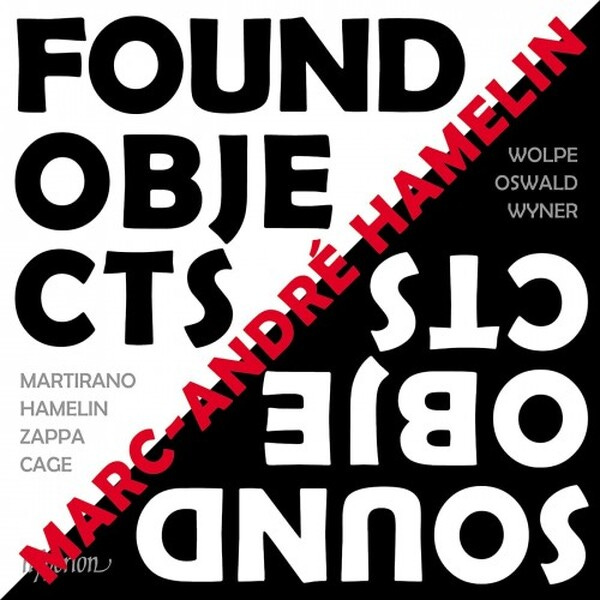
Marc-André Hamelin Found Objects/Sound Objects
(listing at Hyperion)
A classical piano recital in this overview?? Yes, for two reasons. Marc-André Hamelin plays the first prepared piano work, John Cage’s The Perilous Night from 1944, and listening to Sanchez, Mayas, and Cage back to back taught me something about extreme possibility. And: Hamelin’s worldview is essentially of that of an experimentalist, and while that doesn’t really include jazz per se, a program with a Frank Zappa piece, a Salvatore Martirano fantasia on “Stella by Starlight,” a John Zorn-like collage (John Olwald’s Tip), and his own phenomenal transcription of “Dies Irae” (the last part of the outrageous Hexensabbat) shows the great virtuoso looking over the fence at matters that definitely concern our team.
Indeed, I’m happy to call Yehudi Wyner’s glorious Refrain a modern blues. Who’s with me?
The review in Gramophone by Jed Distler is excellent; I agree with Distler’s take on all the pieces, although I don’t see the need to slight Hamelin’s performance of Stefan Wolpe’s epic Passacaglia (No 4 of Four Studies on basic rows). I know three recordings: the first from David Tudor, the Peter Serkin (which Distler prefers), and now Hamelin. They all have magnificent qualities, and the piece is beyond the beyond. Indeed, this must be one of the very finest atonal pieces in the whole repertoire, at least in terms of blending conventional piano wisdom with something truly relentless in the mathematics. When Hamelin played 92NY earlier this year, the Passacaglia was the highlight. Incredible music.
A scrolling score video exists of a live performance. If you like this, we definitely can be friends:
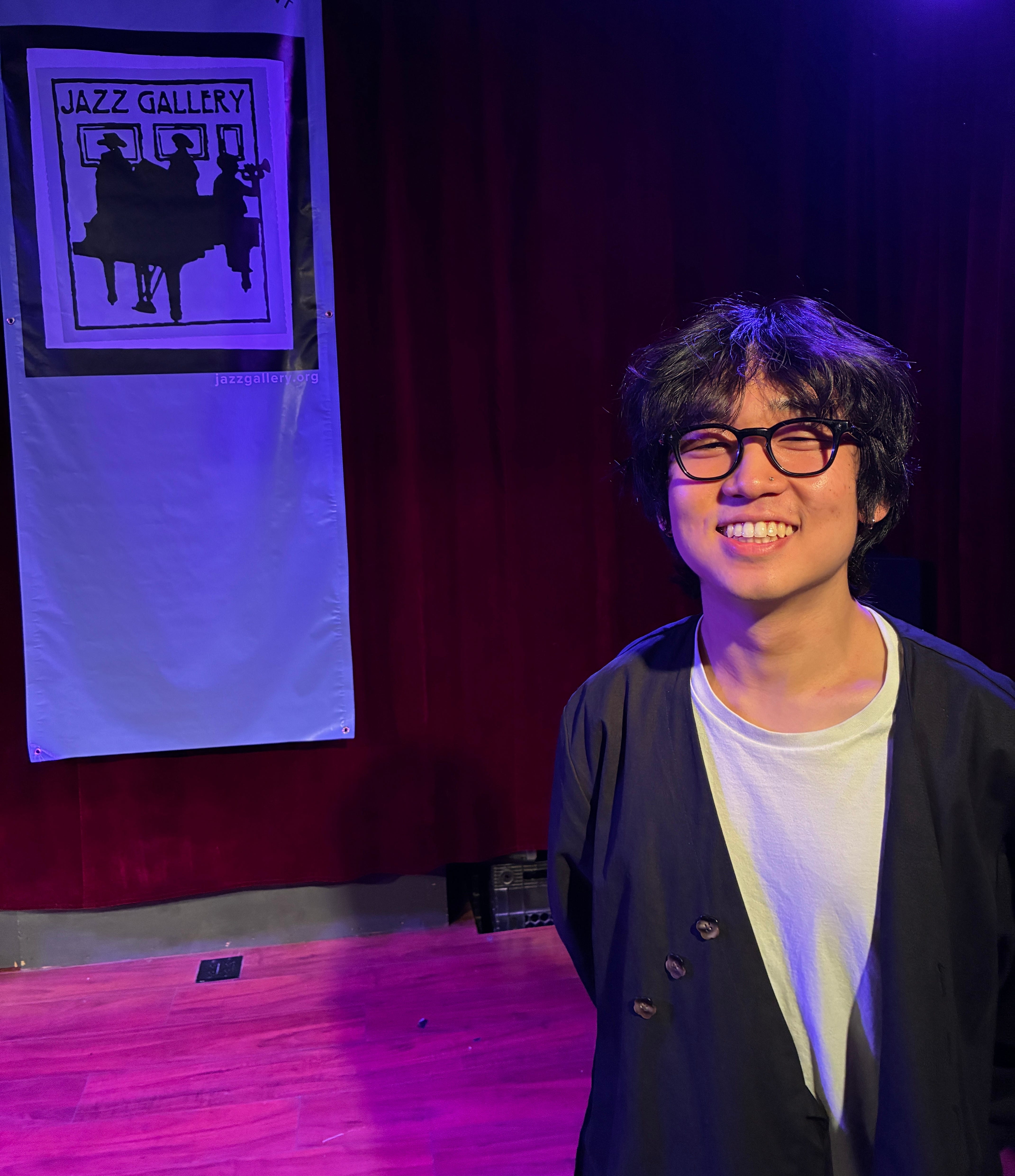
On Saturday Aaron Diehl and I met up to see Jonathan Paik play an hour-long stream-of-consciousness set at the Jazz Gallery. Jonathan is former student of mine at New England Conservatory, and I can cheerfully state that he was advanced enough that I couldn’t teach him a darn thing. (A video I made of him playing along to Eric Dolphy was appreciated on Twitter.) This year, Jonathan is a 2026 TJG Residency Commission recipient, be sure to attend one of his gigs and see what’s up. Kudos to Rio Sakairi and the Jazz Gallery for giving young talents this kind of boost.
Originally I had planned start this post comparing Jason Moran Plays Duke Ellington to Your Mother Should Know: Brad Mehldau Plays The Beatles. But then I realized that Mehldau’s album was older than I remembered, recorded 2020 and released 2023, and I wanted to keep to albums released in 2026. However, there is definitely a think piece here in Moran/Ellington vs. Mehldau/Beatles if someone else wants to proceed! For now, I just must say how impressed I am with Brad’s bluesy take on “I Saw Her Standing There.” A Dr. John/Brad Mehldau nexus, while unexpected, is most welcome.
Thanks for these reviews. The Moran was on my radar -- GREAT record -- but other new ones were not. Coda: I heard a performance in the early 1980s of Martirano's "Stuck on Stella" at the University of Illinois, and not only did I also hear Sal, a jazz pianist in his spare time, play "Stella By Starlight" in a club, I once played the tune with him myself in a practice room at the music school.
The Yvonne Rogers record is disconcertingly great. Listening to it I felt like it was the record I would have made in an alternate universe in which I actually unreservedly applied myself to music. I love to encounter a new artist and think "I never would have thought of that!"; here instead it was "Here's what I would have eventually thought if I had kept on thinking". It's like I had a little secret musical path that was just mine but I never fully explored, and I finally walked all the way to the end and here was this record waiting for me. I'm super excited to hear where she goes.